Edwina Lowther
A Woman of SubstanceEdwina Lowther, Emma Harte’s firstborn child, grows up at the center of a painful contradiction: she is cherished and protected by her mother, yet remains emotionally remote from her and is kept ignorant of the circumstances of her birth. The secret Emma intends as a shield becomes the cause of their rupture when Edwina finds her birth certificate. Although Edwina later marries and becomes a mother, the evidence of their subsequent contact points to civility and Emma’s enduring hope, not a settled reconciliation.
Identity and family background
Edwina is Emma’s eldest child and her firstborn. Emma had struggled for her from the time she was young herself and loved her with all her heart. Edwina’s own feelings did not match that devotion: Emma recalls her as oddly distant in childhood, remote in youth, and increasingly cold as an adult. The difference between a mother’s sustained care and a daughter’s reserve shapes their relationship long before its most damaging secret is exposed.
Edwina was born outside marriage after Emma became pregnant by Edwin Fairley. When Emma disclosed the pregnancy, Edwin recoiled and could not bring himself to defy his father or cross the class boundary between the Fairleys and a village servant by marrying her. Emma left without his acknowledgement. The circumstances of Edwina’s birth therefore carried both private pain and a social stigma that Emma believed she had to manage on her child’s behalf.
At registration, the law required a father’s name. Emma refused to name the real father. Blackie O’Neill urged her to use his name instead of leaving the certificate to say father unknown, while making clear that this would not change Edwina’s illegitimate status. Emma accepted his intervention, and Blackie accompanied her to the registrar’s office. The arrangement supplied a name on the document but did not remove the fact Edwina would later discover there.
After Emma married Joe Lowther, she told him that Edwina was illegitimate but withheld the father’s identity. Joe accepted her account and insisted on adopting Edwina, giving her his name. His devotion was not merely formal: Emma believed he loved Edwina as much as, perhaps more than, his biological child. In the family life Edwina experienced, Joe was her father in affection as well as name.
Childhood and family ties
The contrast between Emma’s attachment to Edwina and Edwina’s reserve is visible in ordinary domestic moments. As a little girl, Edwina ran into a room calling for Joe, who lifted her and swung her around. Her blue velvet dress billowed, and her very pale, waist-length blonde hair flew behind her as she laughed. The scene makes the security of their bond tangible: she approaches Joe with unguarded delight and receives his open affection in return.
With Emma, even a bedtime visit can feel more formal. When Emma enters Edwina’s room to kiss her good night, Edwina is sitting up reading and looks at her mother with cool grey eyes, as if the interruption has trespassed on her privacy. She answers politely, but the exchange remains restrained. The distance is not evidence that Emma has withheld all tenderness; it is a recurring imbalance, with Emma reaching toward a daughter who does not readily return her warmth.
Edwina’s appearance also connects her to the family history Emma would prefer to leave behind. Emma recognizes a striking resemblance to Adele Fairley, Edwina’s paternal grandmother, describing her as almost a mirror image. Blackie, Emma suspects, had worked out the truth of Edwina’s parentage years earlier, but never signaled his suspicion. This resemblance quietly marks the Fairley connection even while the identity of Edwina’s father remains concealed from her.
Emma’s own feelings toward Edwin Fairley persist, but change in character. By the time she reflects on Edwina, her hatred of Edwin has become intellectual rather than heartbreak-driven: less immediate, Emma thinks, but more directed. Edwina thus remains linked to a past that Emma cannot simply put aside, both through her appearance and through the secret surrounding her birth.
The birth certificate and the break with Emma
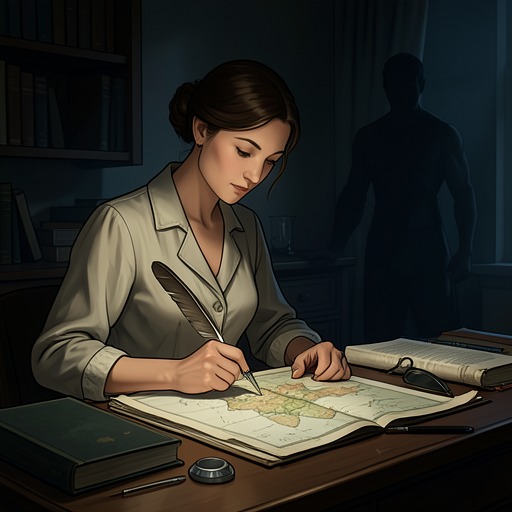
Edwina eventually obtains the information Emma has kept from her by writing to Somerset House for a copy of her birth certificate. She confronts Emma with the document and says she now understands why her mother had hidden it. The discovery that she is illegitimate lands not as a neutral fact of registration but as a revelation withheld throughout her life. Emma is left shaking and unable to answer as Edwina directs her contempt at the status the certificate names.
Edwina’s response is decisive. She plans to spend Christmas with Cousin Freda in Ripon and then attend the finishing school in Switzerland that Emma had previously refused to consider. She also expects Emma to arrange her tuition and continue her allowance. Emma assures her that she has never wanted to deprive her of anything and begs her to stay so they can talk. Edwina refuses further discussion, tells her mother she hates her, and leaves.
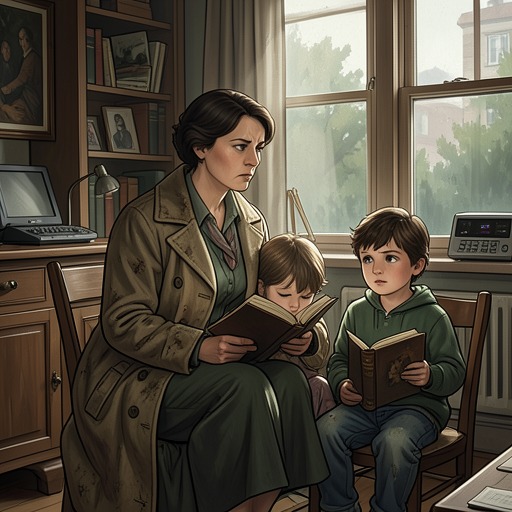
The departure devastates Emma, who had dreaded the confrontation for years and expected that the revelation would cost her what little affection Edwina showed. Emma remembers that Edwina had loved Joe and Freda, while her own devotion had never been returned in the same measure. She briefly considers telling Edwina who her real father is, but recognizes that this would not undo the humiliation of learning she was illegitimate. In that moment, the concealed truth has produced two injuries: the stigma itself and the sense that her mother has kept her own history from her.
The rupture does not mean Emma ceases to provide for Edwina. She continues to treat her schooling and allowance as responsibilities, and later responds to news of Edwina’s marriage with concern and a wish to send a suitable present. The pattern is characteristic: Emma’s care persists even when emotional closeness is absent, while Edwina’s independence includes accepting material support without restoring intimacy.
Marriage, motherhood, and later contact
Winston Harte tells Emma that Edwina is to marry Jeremy Standish. Emma is startled by the news, but asks after the match and learns more when Winston returns from Ireland. Edwina’s husband is the Earl of Dunvale, twenty years her senior. Winston finds it apparent that Edwina is deliriously happy, although he cannot tell whether this is chiefly because she has become a countess and joined an old, celebrated Anglo-Irish family or because she truly loves her husband. He has no doubt that the Earl is besotted with her.
A year later, Edwina gives birth to a son, Anthony George Michael. As the firstborn, he receives the courtesy title Lord Standish and is heir to the earldom. Emma writes to congratulate her daughter and sends a gift, repeating the gesture she had made at the wedding. Edwina replies with a courteous but cool note of thanks. Emma takes this limited exchange as a possible beginning of reconciliation and resolves to enlist Winston’s help, because the prospect of becoming friendly with her eldest daughter remains deeply important to her.
Other family members respond differently to Edwina’s distance. Kit feels slighted that he was not invited to her society wedding and criticizes her as snobbish and indifferent to her family. Paul McGill repeatedly admonishes him, eventually forbidding him to discuss Edwina with Emma. Paul also sustains Emma’s hope that she and Edwina may become friendly again, knowing that the alternative is too painful for her to accept. The later family history therefore leaves Edwina neither wholly reconciled nor wholly absent: there are letters, gifts, a marriage, and a grandchild, but no evidence here that the original breach has been healed.
Narrative significance
Edwina’s story gives material form to the cost of secrecy within a family. Emma’s decision to protect her daughter from the truth of an unmarried pregnancy is shaped by the social shame attached to illegitimacy; Blackie’s name on the certificate can soften one part of the record but cannot erase that status. When Edwina discovers the document for herself, the protection Emma intended is experienced as concealment, and the mother’s long devotion cannot prevent the daughter’s rejection.
Her relationships also make clear that family belonging is not determined by biology alone. Joe adopts Edwina and loves her as his own; Freda is among the people Edwina loves; Emma, though her biological mother and a tireless provider, remains emotionally distant from her. Edwina’s later marriage and the birth of an heir establish a new family position, but do not automatically repair the old bond. Her arc consequently ends in a fragile interval: Emma keeps reaching out, Edwina answers with formal courtesy, and reconciliation remains an unfulfilled hope.